

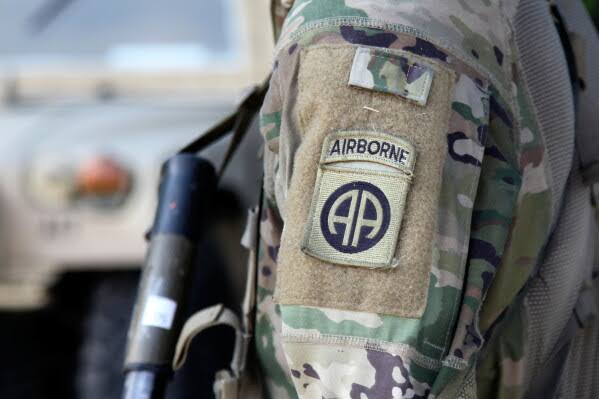
Deployment does not put life on hold. Marriages that were struggling before orders arrived do not improve because one spouse is overseas, and the legal and financial issues that need to be resolved in a divorce do not wait for a service member to return stateside. For military personnel deployed from the Tampa Bay area, the question of whether and how to file for divorce while deployed, or how to respond to a divorce filed by a spouse while deployed, is one that comes up with more regularity than most people expect.
The answer is that divorce while deployed is possible, but it is complicated in ways that require careful planning, the right legal representation, and a clear understanding of the federal and state law that governs the process. Both service members who want to initiate a divorce while deployed and those who are being served with divorce papers while overseas need to understand the framework before making any decisions.
The Threshold Question: Can You File for Divorce While Deployed?
The short answer is yes, a deployed service member can file for divorce in Florida, but doing so requires meeting Florida’s jurisdictional requirements and navigating some practical challenges that do not exist in a civilian divorce.
Florida requires that at least one party to a divorce have been a bona fide Florida resident for at least six months immediately before filing. For a service member who was stationed in Florida before deployment, the question of whether Florida residency is maintained during deployment depends on domicile, not physical presence. A service member who was living in Tampa, maintained Florida as their legal home state, kept Florida vehicle registration, and considers Florida their permanent residence does not lose Florida domicile simply because military orders sent them overseas.
However, a service member who is stationed in Florida temporarily due to military orders but maintains legal ties to another state, such as a different state of legal residence for tax purposes, a driver’s license from another state, and family in that other state, may not be domiciled in Florida for divorce purposes. In that situation, the non-military spouse may independently meet the Florida residency requirement, or the divorce may need to be filed in a different state.
For deployed service members who want to initiate a divorce, determining the correct forum is the first step, and it is one where working with a Tampa military divorce lawyer who understands the jurisdictional analysis is essential.
How Service of Process Works When a Spouse Is Deployed
For a non-military spouse who wants to file for divorce while the service member is deployed, serving the service member with the divorce papers is the first significant challenge. Service of process on a deployed service member requires attention to both Florida procedural rules and the Servicemembers Civil Relief Act.
Under Florida law, a defendant in a civil proceeding must be served with the complaint and summons. The standard methods of personal service are not available for a service member who is deployed overseas. Alternative methods including service by mail, service through a designated representative, and in some cases service by publication may be available depending on the circumstances.
The Servicemembers Civil Relief Act adds a layer of federal requirement. Before a default judgment can be entered against a service member who has not appeared in the case, the party seeking the judgment must file an affidavit with the court stating either that the defendant is not in military service or that the filing party cannot determine the defendant’s military status. If the affidavit indicates the defendant may be in military service, the court must appoint an attorney to represent the service member’s interests before any default judgment can be entered.
Attempting to proceed to default without following these requirements is a serious mistake. A default judgment entered against a deployed service member without SCRA compliance can be set aside upon the service member’s application after their return, regardless of how long after the judgment the application is made. This outcome serves no one and generates significant legal fees to unwind what should have been done correctly the first time.
A Florida military divorce attorney handling a case where the service member is deployed will ensure that service is accomplished through channels that comply with both Florida procedural rules and the SCRA, and will advise the client on realistic timelines given the practical challenges of serving a deployed party.
The SCRA Stay: Protecting Deployed Service Members from Default
For a deployed service member who is served with divorce papers while overseas and cannot meaningfully participate in the proceedings, the Servicemembers Civil Relief Act provides the most important immediate protection: the right to request a stay of the proceedings.
Upon a proper application, a court must grant an initial stay of at least ninety days. The application must include a letter from the service member’s commanding officer confirming that the service member’s military duties prevent their appearance and that military leave is not authorized at the time of the request, as well as a statement from the service member confirming that military service materially affects their ability to participate and providing a date when they expect to be available.
The ninety-day mandatory stay is a floor. Courts have discretion to grant additional stays beyond the initial ninety days if military service continues to materially affect the service member’s ability to participate. For a service member on a nine-month or twelve-month deployment, the SCRA stay can provide protection throughout the deployment period, though additional stays after the initial ninety days require a renewed showing that military service continues to prevent participation.
It is critical to understand that the SCRA stay is not automatic. A deployed service member who does nothing after being served will not receive automatic protection from default. The stay application must be filed with the court, with the required supporting documentation. A service member who is deployed and has been served with divorce papers needs to retain a military divorce lawyer in Tampa who can file the stay application on their behalf and ensure the required documentation is obtained and submitted.
The SCRA also allows the court to appoint an attorney for the service member when a default is sought and the service member has not appeared. That appointed attorney has specific obligations under the SCRA and must take steps to locate and notify the service member before reporting back to the court. This is a different protection from the stay, and both may apply depending on the circumstances.
Temporary Orders During a Deployment
One of the most practically significant questions in a divorce filed during deployment is what happens to temporary support orders. Divorces frequently involve temporary orders for child support, spousal support, and use of the marital home that are entered early in the proceedings and remain in effect until a final judgment is entered.
A deployed service member who is not participating in the proceedings because of an SCRA stay or because they have not yet retained counsel may find that temporary orders have been entered in their absence. Florida courts have authority to enter temporary support orders even when an SCRA stay is in effect in some circumstances, particularly when children are involved and support is needed.
For the service member, understanding the financial implications of temporary orders entered during deployment is important. Military pay, including base pay, housing allowance, and other components, is income for purposes of calculating child support and alimony under Florida law. A temporary order entered while the service member is deployed will likely be based on their military compensation, and failing to comply with that order, even while deployed, can have consequences.
For the non-military spouse, understanding that a stay of the overall proceedings does not necessarily mean all temporary relief is unavailable is important for planning purposes. A Florida military divorce attorney can advise on what temporary orders can be sought and how to proceed when the service member has invoked the SCRA stay.
Power of Attorney: Essential Planning Before Deployment
For service members who anticipate that a divorce may occur during or after a deployment, executing a properly structured power of attorney before departure is one of the most important legal planning steps they can take.
A power of attorney allows a designated agent to act on behalf of the service member in legal and financial matters. In the divorce context, a power of attorney can authorize an attorney to enter appearances, sign documents, participate in hearings, and take other procedural steps on behalf of the deployed service member without requiring the service member’s physical presence.
Not all powers of attorney are created equal, and the scope of the power of attorney matters significantly. A general power of attorney is broad but may not be specific enough for all purposes in a divorce proceeding. A special or limited power of attorney tailored to the specific legal authority needed in the divorce is often more appropriate.
Florida courts and opposing counsel may require verification of the scope and validity of a power of attorney before acting on it. A power of attorney that was properly executed under military law, which has specific provisions for powers of attorney executed by service members, is generally recognized by Florida courts.
A Tampa military divorce lawyer advising a service member before deployment will recommend that a power of attorney be in place before departure if there is any possibility that legal proceedings may need to move forward during the deployment. Attempting to create this authorization after departure is possible but adds complexity and potential delay.
Military Legal Assistance: What It Can and Cannot Do
Every military installation, including MacDill Air Force Base, has a Legal Assistance Office that provides free legal services to active duty service members, their dependents, and in some cases retirees. Understanding what military legal assistance can and cannot do is important for deployed service members navigating divorce.
Military legal assistance attorneys can provide general legal advice, help with wills and powers of attorney, explain rights under the SCRA, and in some cases help with uncontested divorce documents. They are a valuable resource and service members should take advantage of them.
What military legal assistance attorneys cannot do is represent a service member in a contested divorce proceeding in a Florida court. Legal assistance is advisory, not representational in the litigation sense. For a divorce that involves contested financial issues, custody disputes, or a spouse who has retained aggressive private counsel, military legal assistance is a starting point but not a substitute for retaining a private Florida military divorce attorney who can appear in court, file motions, and advocate in adversarial proceedings.
The distinction matters practically. A deployed service member who relies solely on installation legal assistance for a divorce involving significant assets, military retirement pay, and contested custody may find that the legal assistance office was helpful in explaining their rights but was not positioned to protect those rights in actual litigation. Retaining private counsel, even from overseas, is often the appropriate step for any contested divorce.
Communicating with Your Lawyer From Overseas
A deployed service member retaining a Tampa military divorce lawyer faces the practical challenge of conducting legal representation across significant time zone differences, limited communication availability, and the demands of an operational environment. Managing this effectively requires planning on both sides.
Experienced military divorce attorneys who represent deployed clients have established processes for communicating across these constraints. Video calls scheduled during windows when communication is available, email for non-urgent matters, and clear protocols for decisions that need to be made quickly are all part of working effectively with a client who is overseas.
Before deployment, the service member and their attorney should discuss and document the scope of the power of attorney or other authorization that allows the attorney to act on routine matters without requiring the service member’s direct approval on every step. Clear guidance from the service member about their priorities, their non-negotiables, and the financial information the attorney needs to represent them effectively reduces the need for constant communication during periods when it may be difficult.
The attorney should also ensure they have multiple points of contact for the service member, including a trusted family member or friend who can relay messages if direct communication is temporarily unavailable. Deployment communication can be unpredictable, and building redundancy into the communication plan reduces the risk that important legal matters are delayed by a temporary communication blackout.
Financial Considerations for the Deployed Service Member
Deployment affects the service member’s financial picture in ways that are relevant to the divorce proceedings. Understanding these effects helps both the service member and their attorney develop accurate financial projections for the divorce.
Deployed service members receive additional pay and benefits that do not apply when stateside. Hostile fire pay or imminent danger pay applies in designated combat zones and adds to monthly income. Family Separation Allowance is paid to service members whose dependents do not accompany them due to deployment. Tax exclusion benefits in combat zones reduce the effective tax burden on combat zone income, which can affect how income is calculated for support purposes.
These deployment-specific benefits are temporary. They end when the deployment ends. When calculating child support or alimony for the period after the service member returns, using deployment-inflated income figures can produce support orders that do not reflect the service member’s normal financial picture. A Florida military divorce attorney representing a service member will ensure the court understands the distinction between deployment income and regular service income and advocates for support calculations based on a realistic long-term income assessment.
Conversely, the non-military spouse may argue that the service member’s increased deployment income reflects their earning capacity and should factor into support calculations even after deployment. How this argument is addressed depends on the specific facts of the case and the length and frequency of the service member’s typical deployment schedule.
What Happens to the Divorce When the Service Member Returns
For divorces that were stayed or otherwise delayed due to deployment, the period after the service member’s return is when the case picks up momentum. The SCRA stay ends when military service that materially affected the service member’s ability to participate concludes, and at that point the proceedings move forward on Florida’s normal timeline.
For service members returning from deployment to a pending divorce, retaining or re-engaging counsel quickly is important. Florida courts will generally allow a reasonable period for a returning service member to get their legal representation in order, but the proceedings will not wait indefinitely. Filing an appearance and responding to any pending motions promptly after return protects the service member’s interests and prevents any default-based adverse rulings.
For the non-military spouse, the return from deployment is often when negotiations on financial issues and custody can meaningfully begin. Issues that could not be resolved during the deployment, including the division of military retirement pay, alimony calculations based on the service member’s normal income, and detailed custody arrangements, can now be addressed with both parties available to participate.
Frequently Asked Questions
Can I file for divorce in Florida while I am deployed overseas?
Yes, if you meet Florida’s residency requirement. Florida requires that at least one party be a bona fide Florida resident for at least six months before filing. Deployment does not automatically end Florida domicile if you maintained Florida as your legal home state before leaving. You can retain a Tampa military divorce lawyer to file on your behalf while you are overseas, and a properly executed power of attorney can authorize your attorney to take necessary procedural steps in your absence. The practical challenges of filing while deployed are manageable with the right legal representation in place.
My spouse filed for divorce while I was deployed and I did not know about it. What can I do?
If a default judgment was entered against you while you were deployed and the SCRA procedures were not followed, the judgment may be voidable. Under the SCRA, a court must reopen a default judgment if you apply within ninety days of the termination of your military service, demonstrate that your service materially affected your ability to defend the case, and show you have a meritorious defense. If you recently returned from deployment and discovered a default judgment, consulting with a Florida military divorce attorney immediately is essential to evaluate whether the judgment can be challenged and to act within the applicable time limits.
Can my spouse get a final divorce judgment while I am deployed even with an SCRA stay in place?
A court that follows SCRA procedures properly should not enter a final judgment against a deployed service member who has properly invoked the stay. The initial mandatory stay is at least ninety days, and additional stays may be granted. However, if you do not actively invoke the stay by filing the required application with supporting documentation, the case can proceed in your absence. The SCRA does not provide automatic protection. You must assert the protections through the proper channels, which requires either your direct action or action by an attorney holding your power of attorney.
Does deployment count as income for child support purposes in Florida?
Military income including base pay, housing allowance, and other regular compensation is income for purposes of calculating child support under Florida law. Deployment-specific pay such as hostile fire pay and family separation allowance is also generally treated as income. However, deployment pay is temporary, and a support order based on deployment-inflated income may not reflect the service member’s normal financial picture once they return. A military divorce attorney in Tampa will advocate for support calculations that distinguish between deployment income and the service member’s regular compensation to avoid support orders that become unmanageable after deployment ends.
What should I do before deploying if I think my spouse may file for divorce while I am gone?
The most important steps are to retain a Florida military divorce attorney before departure, execute a properly scoped power of attorney authorizing that attorney to act on your behalf, gather and provide your attorney with all relevant financial documents and information, and discuss your priorities and instructions for how the case should be handled in your absence. You should also ensure your attorney has multiple ways to reach you and a contact person stateside who can relay messages. Taking these steps before departure is far easier and less stressful than trying to manage a divorce proceeding from an operational environment without prior preparation.
Can I attend court hearings via video while deployed?
Florida courts have increasingly accommodated remote appearances via video for service members who are deployed, and many judges are willing to schedule hearings at times that account for significant time zone differences. Whether a particular hearing can proceed via video depends on the nature of the hearing and the judge’s practices. For routine procedural matters, evidentiary hearings, and status conferences, video appearances are often feasible. For a final hearing or trial, more significant accommodation may be required. A Tampa military divorce lawyer who regularly represents deployed clients will know how to approach this issue with the court and advocate for accommodations that allow the case to proceed without requiring the service member to be physically present for every hearing.
What happens to temporary support orders entered while I was deployed?
Temporary support orders entered while you were deployed are generally enforceable even if you were not present when they were entered, provided proper SCRA procedures were followed. If a temporary order was entered in violation of the SCRA, there may be grounds to challenge it. If the order is valid but based on deployment-inflated income, you can seek modification after your return by demonstrating that your income has changed. Florida courts will modify temporary orders when there has been a substantial change in circumstances, and the end of deployment-specific pay can qualify as such a change. Addressing this promptly after your return, rather than waiting, limits the accumulation of unpaid support at the higher rate.
Divorce during deployment is not impossible, and it is not something that has to wait until a service member returns stateside. What it requires is advance planning, the right legal representation on both sides, and a thorough understanding of the federal protections that apply to service members who cannot participate in civil proceedings due to military duties. For Tampa Bay area service members and their spouses, working with a Tampa military divorce lawyer who handles these cases regularly is the most reliable way to ensure that a deployment does not result in procedural missteps, unenforceable judgments, or outcomes that neither party intended.
Written by Damien McKinney, Founding Partner

Damien McKinney is the Founding Partner of The McKinney Law Group Family & Divorce Lawyers, bringing nearly two decades of experience to complex marital and family law matters. He is licensed in both Florida and North Carolina and has been repeatedly recognized as a Rising Star by Super Lawyers.